Kouyama Hisao (香山 壽夫) has been a force to be reckoned with in the modern architecture scene in Japan, even though outside of the country, he is rather obscure. A PhD of engineering in architecture, Kouyama embeds technology into his buildings effortlessly. For example, in his design of the Saitama Arts Theater District, the interior walls of the concert hall are ever so subtly slanted in an elegant manner. Few would understand that these are not as decorative as they are an acoustic treatment of the room. His use of forms, on the other hand, is subdued and suggestive: a Palladian-styled archway indicates the entrance into a Western auditorium for classical music, while a flat eave suggests a threshold into a space for traditional Japanese plays. Inside each performance hall, he also uses faux façades to bring about a cozy feel of a small ville plaza where one would go to enjoy an outdoor music event.
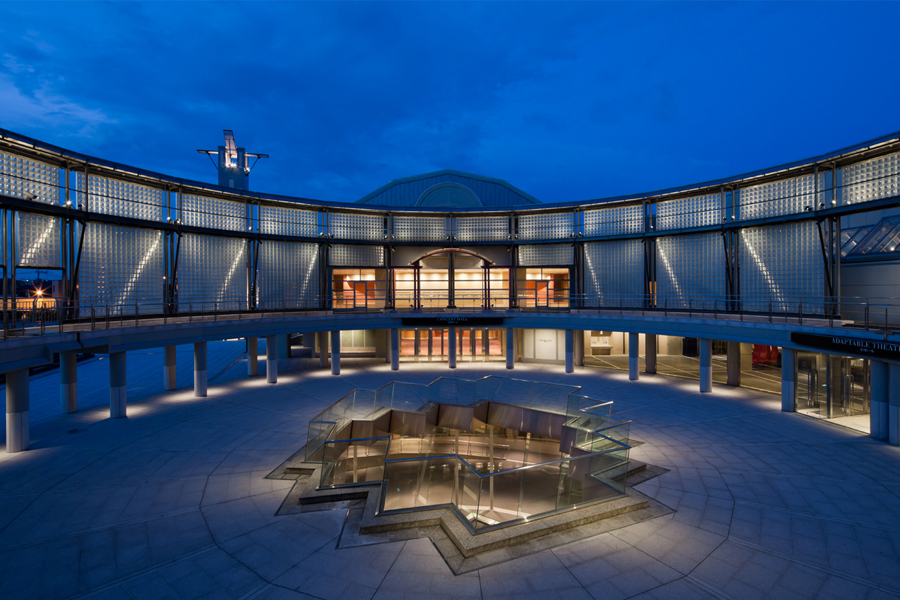
Sainokuni Arts Theater in Saitama, Japan
Image source: https://www.saf.or.jp/en/venues/arthall.html
Taught by Tange Kenzo and Kishida Hideto - preeminent figures in Japan's postwar architecture - at the University of Tokyo and later on by Louis Kahn and Robert Venturi at the University of Pennsylvania, Kouyama's training was at the crossroad of East and West. This contrast was underscored in his discussion1 of the teaching of theory at UofT and UPenn: while Tange and Kishida virtually taught him "nothing" of notes during his undergraduate years, Kahn and Venturi showed him a way to formally and properly discuss architecture he'd never known before. The lingo, the verbiage, the names of styles, the specific examples etc. are some of a few things Kouyama picked up during his time at UPenn.
Interestingly, Kouyama noted that Venturi did not teach architectural history in a chronological order, but rather by the relevance of the elements (door, walls, windows, columns etc.). I wonder if it is because of such a training in history that not two minutes later, in the very same interview, Kouyama made an error calling Roman architecture "Beaux-Arts style" while referring to something the Kahn said to him. But was it an error?
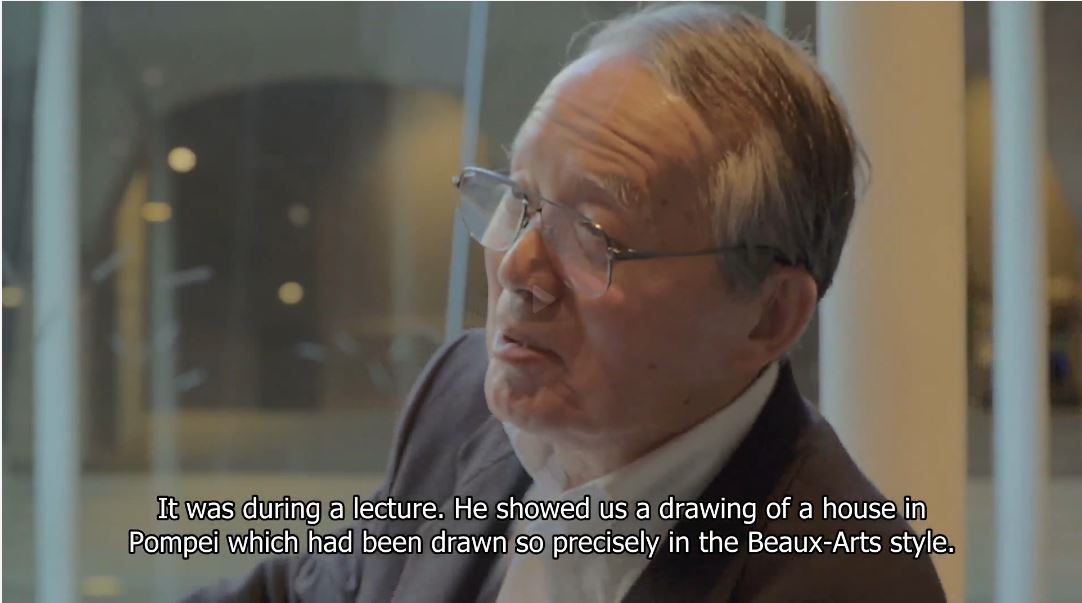
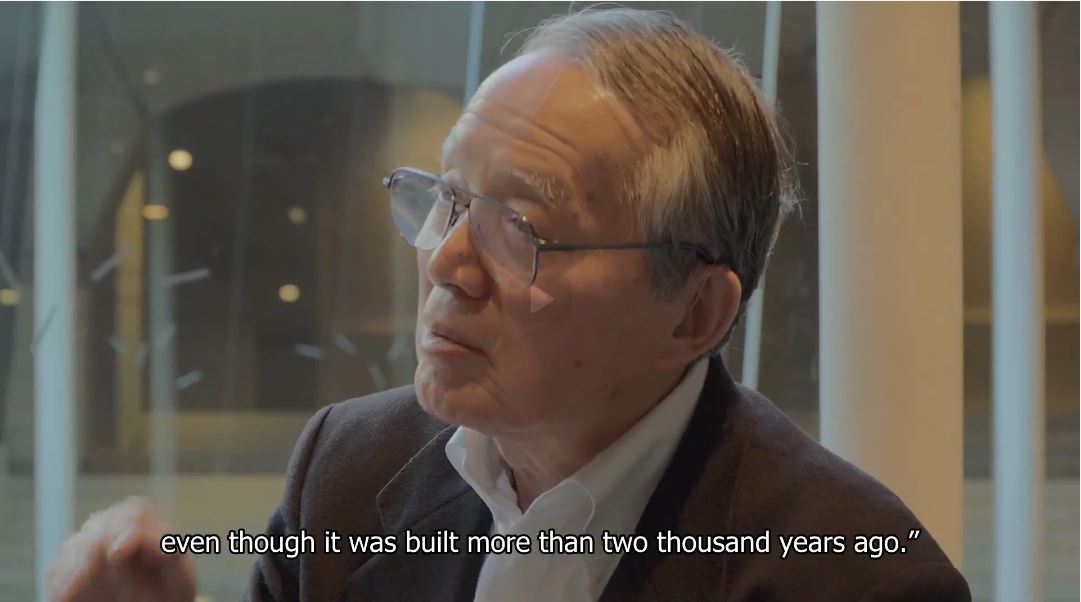
Kouyama Hisao with Obuchi Yosuke
Image source: Four Facets of Contemporary Japanese Architecture
I came to realize that this may very well be exactly what Kahn told Kouyama, verbatim. I came to suspect that if anyone was mistaken, it was not Kouyama, but Kahn himself. But again, was anyone mistaken?
Note that the word was "Beaux-Arts style" and not "Beaux-Arts". Can a style exist before it is named? Certainly. It is named precisely because it exists (duh?). Then could Beaux-Arts style have existed before the school of Beaux-Arts was created in Paris following Neoclassicism and other Revival movements, which in turn gave impetus to the Second Empire style? Possibly, if we judge architectural styles by their essence and not by their timeline. Beaux-Arts, after all, has its teaching based on classical, Renaissance, and revival principles, n'est-ce pas? It is therefore entirely possible that Kouyama and potentially Kahn believe that a Pompeian home built 2000 years ago was built with Beaux-Arts underpinning, and that they intentionally say that to illustrate the point that timeline means nothing to styles.
Architectural theory without architectural history. Very curious, to say the least.
-------
1. This discussion was recorded as part of an online class on history of Japanese modern architecture led by Kuma Kengo and Obuchi Yosuke.
2. Follow Kouyama Atelier through their official website: http://kohyama-a.co.jp/en/works/